

ClimberGirl—An Audio Interview with novelist and psychologist Jim Porzelius
November 14, 2022
Life doesn't pause while you figure out how to handle your trauma. The daily hassles and irritations as well as the accomplishments and milestones keep coming. In a podcast for Smith Rock TV, we talk with author, former climber, and psychologist Dr. James Porzelius (Jim) about the intersection of mental and physical—in this case, climbing, in dealing with trauma, plus other insights Jim shares from his unique perspective. Jim's novel, ClimberGirl, takes you on a tender journey of recovery, not just for the formerly active father after a devastating injury, but also for his 12-year-old daughter whose outdoor lifestyle with her dad abruptly ends.

Jim has worked for over 20 years as a clinical psychologist with people who have had spinal cord and brain injuries, helping them deal with the change in a rehabilitation unit as they are recovering from surgery. He explains the process a bit. “My role as a psychologist was to help the patient deal with that change, work with the staff, sort of whatever it took to be able to engage in that recovery process. I also worked with family members as they were also dealing with lots of loss and big changes.”
A former avid rock climber, Jim draws on his love of climbing to help others see how the “mindfulness'“ of climbing can be used to manage trauma. Through his gift for storytelling, he takes the reader of ClimberGirl into the psyche of Kelly Taylor, a girl just entering middle school when her outdoor activities buddy, (and father) is hit by a drunk driver while on a late afternoon bike ride. Kelly spirals into a sea of emotions, rendering her incapable of moving forward in her life. Then she figures out she can climb without Dad, by “bouldering,” or climbing untethered on rocks low to the ground that are, for the most part, safe if you fall during a route sequence. This simple start leads to a breakthrough for Kelly on many levels.
ClimberGirl opens with a quote from Susan Fox Rogers that has resonated with Jim since the first time he read it. He had a copy of it on the wall of his psychology office for years and feels it guided a lot of the process of writing his novel.
“...it is through climbing that I learned the most important lessons in life. Hold on, but not too tight; work with the rock, don’t fight it, balance is everything; and always remember to breathe.”
In our interview, Jim talks about how the quote applies to managing any stressor and also how it applies to managing loss— especially the desire to hang on and the importance of hanging on to memories and relationships, but not hanging on to them too tightly. He goes on to say that healing is also about allowing yourself to work with the challenge that is presented to you and that this is where balance and breathing come into play, whether you’re a climber or not. As a lover of climbing, he expounds on Susan’s words:
“I find that it can be really useful in dealing with stressors, in that it’s a complete break from stress. When you’re climbing, you really experience full mindfulness. Your attention is just on the things that you’re doing at the moment, the present moment, the activities— the moves that you’re making, and the effect of gravity you’re working with.”
While Jim could have written a non-fiction book about trauma recovery through climbing, he chose instead to focus on the emotions and path forward for a traumatized teenage girl. We asked him why.
He told us that first and foremost, he tried to write a book that was interesting, fun, and readable. “I really think part of the fun of writing is to put yourself in the shoes of somebody different than you and really try to explore what their experiences might be.”
While the book deals with the management of trauma through Kelly Taylor’s story, Jim is also hopeful that the book can be helpful for people who are dealing with a big trauma. “I think that the message that the book might give about that is that trauma management takes time. It's not something that you can just do all at once.”
And for those of us that may not want to deal with our trauma, Jim had some soothing advice: “Some avoidance, some denial can be helpful as a coping strategy. A little denial keeps you from having to deal with more than you can handle at one time. It helps you spread out your trauma over time, and gradually get to where you manage it. And I think that's important. And I also think that it's important when you're dealing with something life-changing as trauma, that you allow yourself to enjoy moments along the way. I don't think it helps to stay miserable until you've figured out how to manage your trauma.”
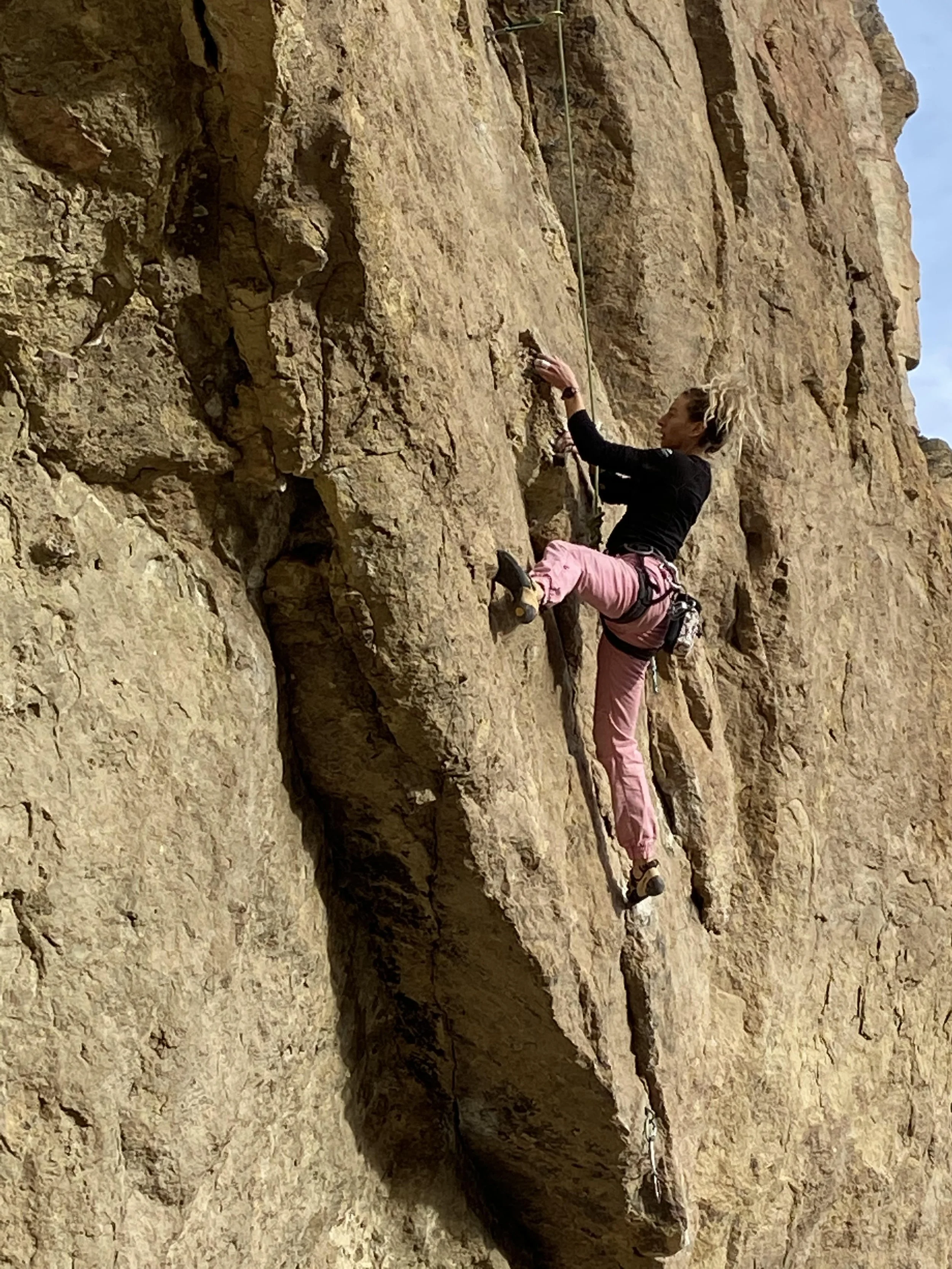
Climbing requires mindfulness, focusing on just the task in front of you.
Whether you climb or not, ClimberGirl’s characters are very relatable to a wide variety of people. Each of us has had or will have similar situations in our lives. Jim’s novel gives us a way forward by exploring the sweet spot where mental and physical can bring healing, as well as gives us the breathing room we need as humans to deal with challenges over time. Thanks, Jim!
For our complete 15-minute interview with Jim Porzelius on his novel, ClimberGirl, listen here, or on Spotify.