
The Chimney Approach to the Gorge Gets a Major Upgrade
November 22, 2019
In the early 1980s at Smith Rock, the only access down to the west side of the Crooked River to do the climbs in the Lower Gorge from the rim above was a chimney ladder put there by climbers. Over the years it was vandalized and rebuilt once or twice, but the steps were actually too far apart and so climbers sought another option.
By the mid-90s Smith Rock State Park management bought the “Rex House” on the Gorge rim, and in the back of the property down a trail opened up the most popular descent route to the Gorge. However, with two fatalities and several other accidents associated with this approach, long-time Gorge climber John Rich wanted to provide an alternative route. Ian Caldwell, long-time Smith Rock climber and Search and Rescue Volunteer also wanted a more solid “chimney” option for rescues in the Gorge area.

Climbers head down the path behind the park’s administrative “Rex House” to the descent that opened up in the 1990s into the Gorge.

Ian Caldwell shows where he has shored up the descent area with boulders since the recent fatality.
In early November, the two of them decided to reestablish and upgrade the original chimney and ladder approach to the Lower Gorge climbs since more traffic has been going there since the June 12 park acquisition of property on either side of the Gorge Area. Together with climber Paul Knill they hoisted out the old wooden ladder and replaced it with a metal ladder that had resurfaced in the Gorge from an old Japanese commercial shoot from years ago. It was still in great shape and tall enough to span from the bottom of the chimney to about half the way up. They then drilled holes and glued in stainless steel rungs like those found on the Via Ferrata ladders in the Dolomites in Italy. The process is the same as used currently for establishing and updating climbing bolts to be sturdy and weatherproof.

The old wooden ladder. Image courtesy of Paul Knill.

John Rich prepares to get tools and supplies from Paul Knill.
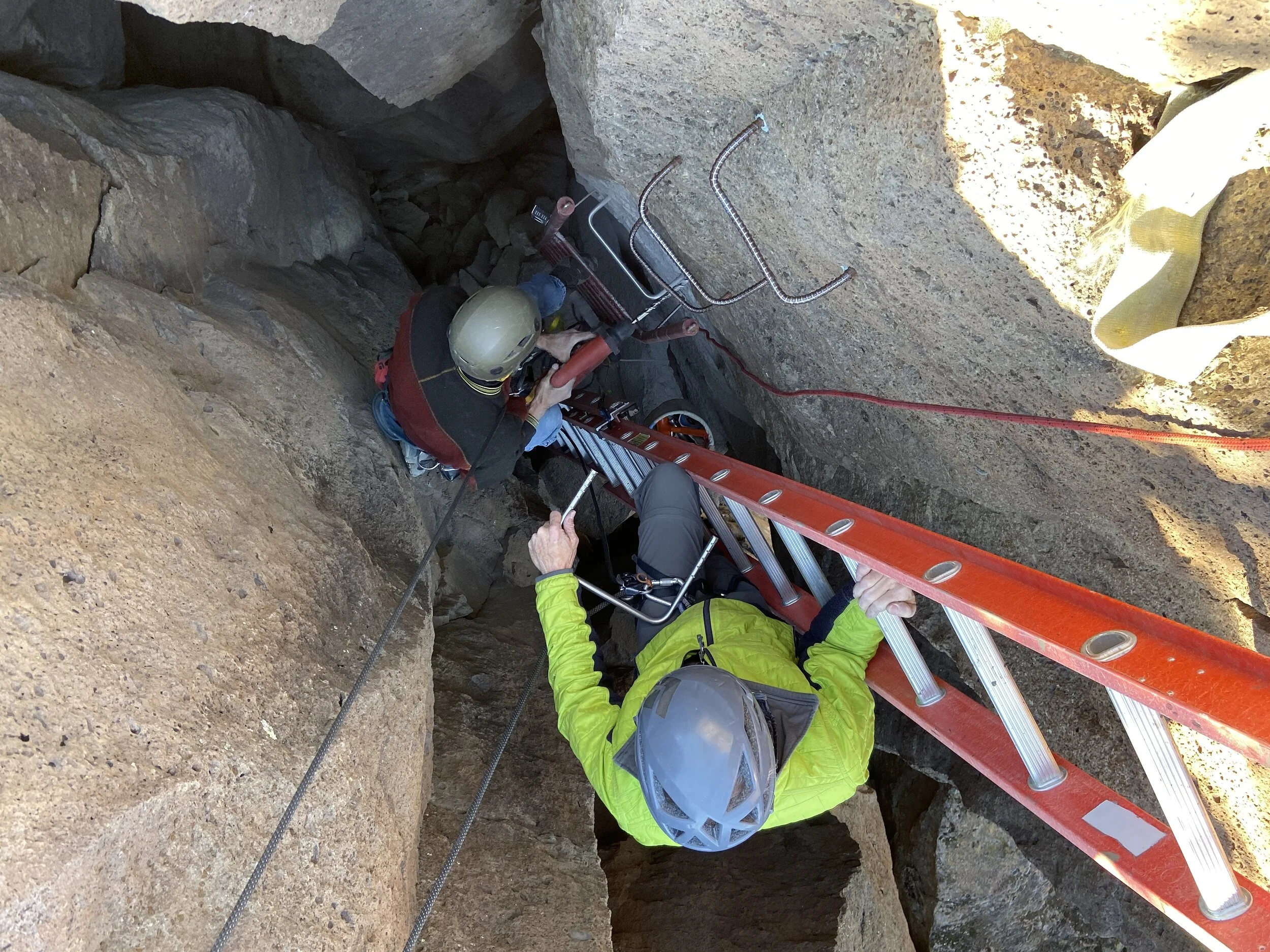
Ian Caldwell drills a hole for the rungs to be glued in while John Rich prepares to hand him a rung.

Ian Caldwell inspects the old rebar rungs that will be removed at the top and replaced with stainless steel.

The base of the chimney ladder portion.

John Rich points out the path to the Chimney at the North Point Trail head just past the overflow parking lot.
Mike Volk looks down the Chimney. A rock cairn marks the spot. Click to enlarge.
Once at the bottom of the chimney, it is still a 3rd-class scramble to a trail that traverses across the top of a boulder field to get to the base of the columns. John has placed cairns along the way to guide climbers to where it joins the approach route at the more popular descent route in back of the Rex house.
While the new chimney ladder adds a little distance and time to the approach, it is a nice alternative for climbers and Search and Rescue teams to the “Rex descent.”
Thanks John, Ian, and Paul for your great volunteer effort in providing another choice for how climbers and rescue teams can access the Lower Gorge!
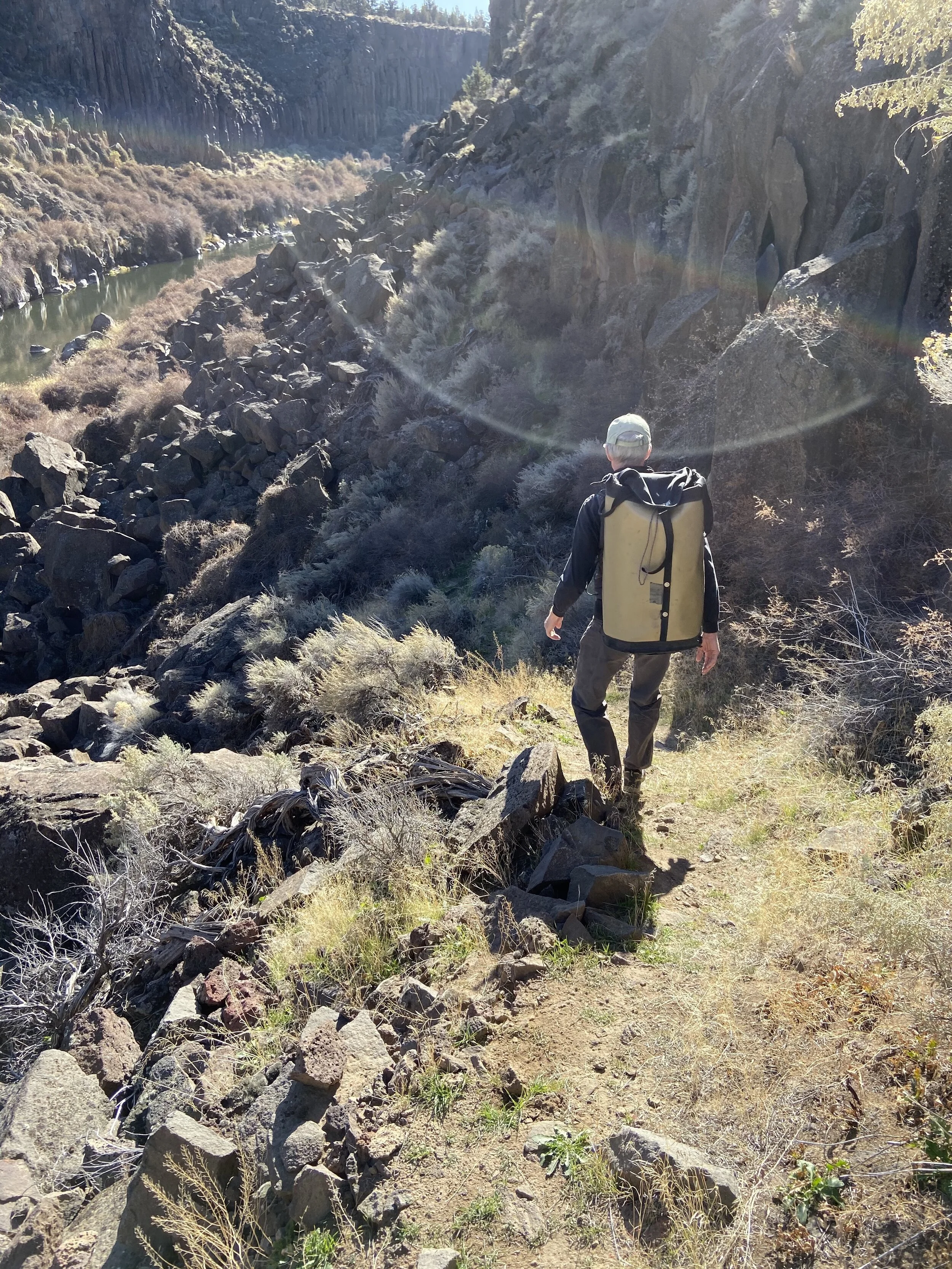
John Rich starts down the dirt path toward the boulder field.

John Rich heads up the boulder field, placing cairns for others.

Cairns continue to mark the path to the base of the climbs.
NOTE: this is not an official Smith rock state park trail, is intended for rock climbing access only and is to be used at your own risk.