

Banner image plus all article images courtesy of Charlie Baughman
(Smith Rock Wildlife Photographer) Charlie's Back—This Time with Planets, Comets, and Stars
December 26, 2020
Charlie Baughman is back with more incredible images, this time of some of the year’s outstanding celestial events—one that has come to be known as the “Christmas Star.” You may remember the article we did last August on his arresting images of the Peregrine “puffballs,” or chicks and Bald Eagles action during nesting season.
Two things are necessary when it comes to getting the images Charlie shoots. The first is patience. The second is of course good gear combined with quick recall on the right combination of settings to capture fleeting images. Charlie has these both in abundance and was willing to share some of what he did for fellow photographers to geek out on. For the rest of us, we appreciate the result and for him sharing them with us.
The first set of images from Charlie are of the “Great Conjunction” of Jupiter and Saturn, seen at its peak on the winter solstice on December 21, 2020. The planets regularly appear to pass each other in the solar system, with Jupiter and Saturn doing their drive-bys about once every 20 years. What was so special about THIS alignment for us humans was that we haven’t witnessed them passing this close in almost 400 years, and 800 years since the alignment of Saturn and Jupiter occurred at night.
“I had problems getting good conditions for Jupiter and Saturn Conjunction photos until 12/22 when the wind was calm and the sky was mostly clear of smoke and clouds.”
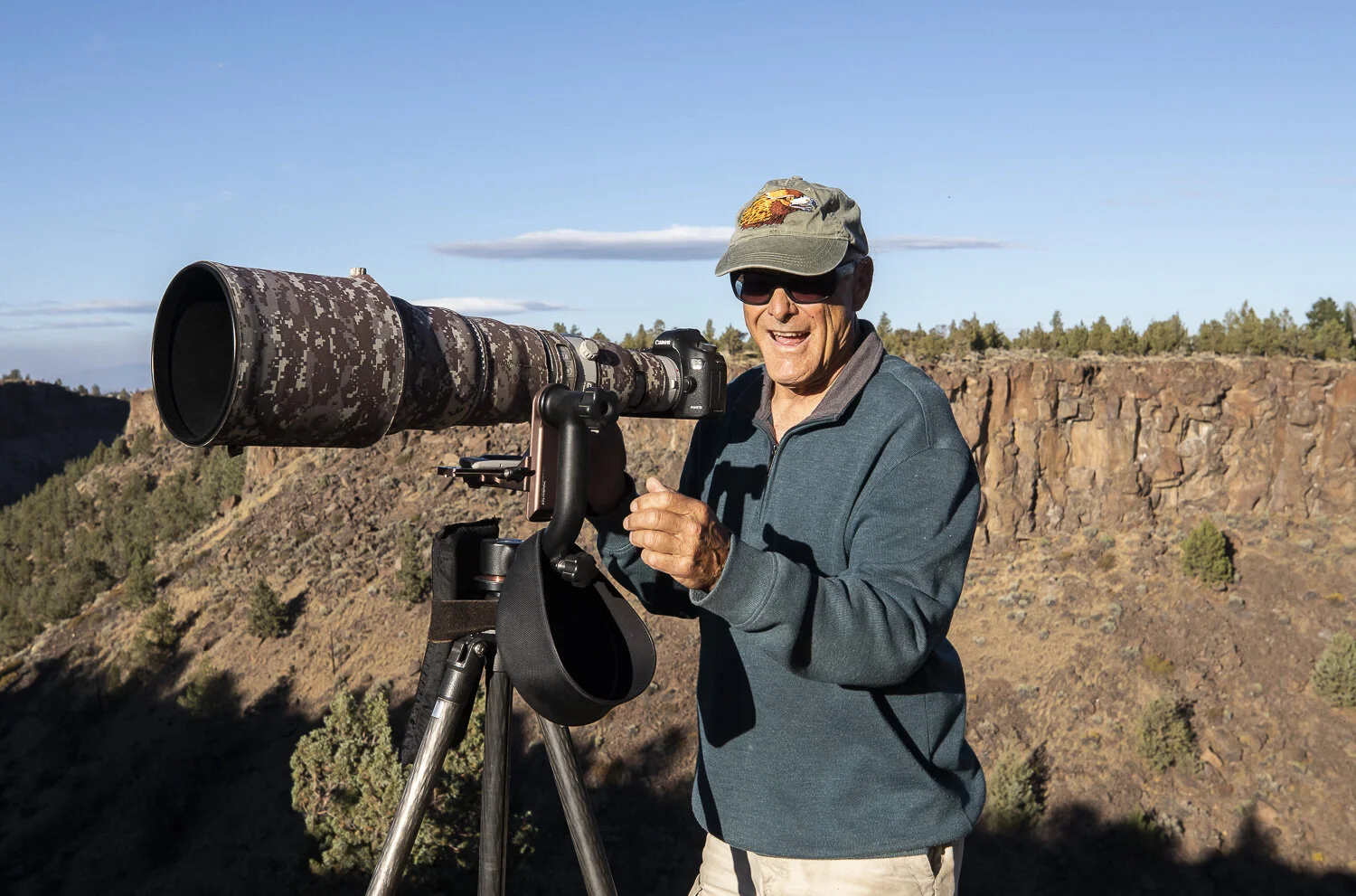
Charlie Baughman in one of his happy places.
Per Charlie:
”The Canon 600mm lens needs to be very still in order to avoid vibrations. I also used a 2-second shutter delay. Manual focus is necessary and very tedious. The Camera was an R5 for the long lens shot. Settings were 1/50, f/4, iso 2000.
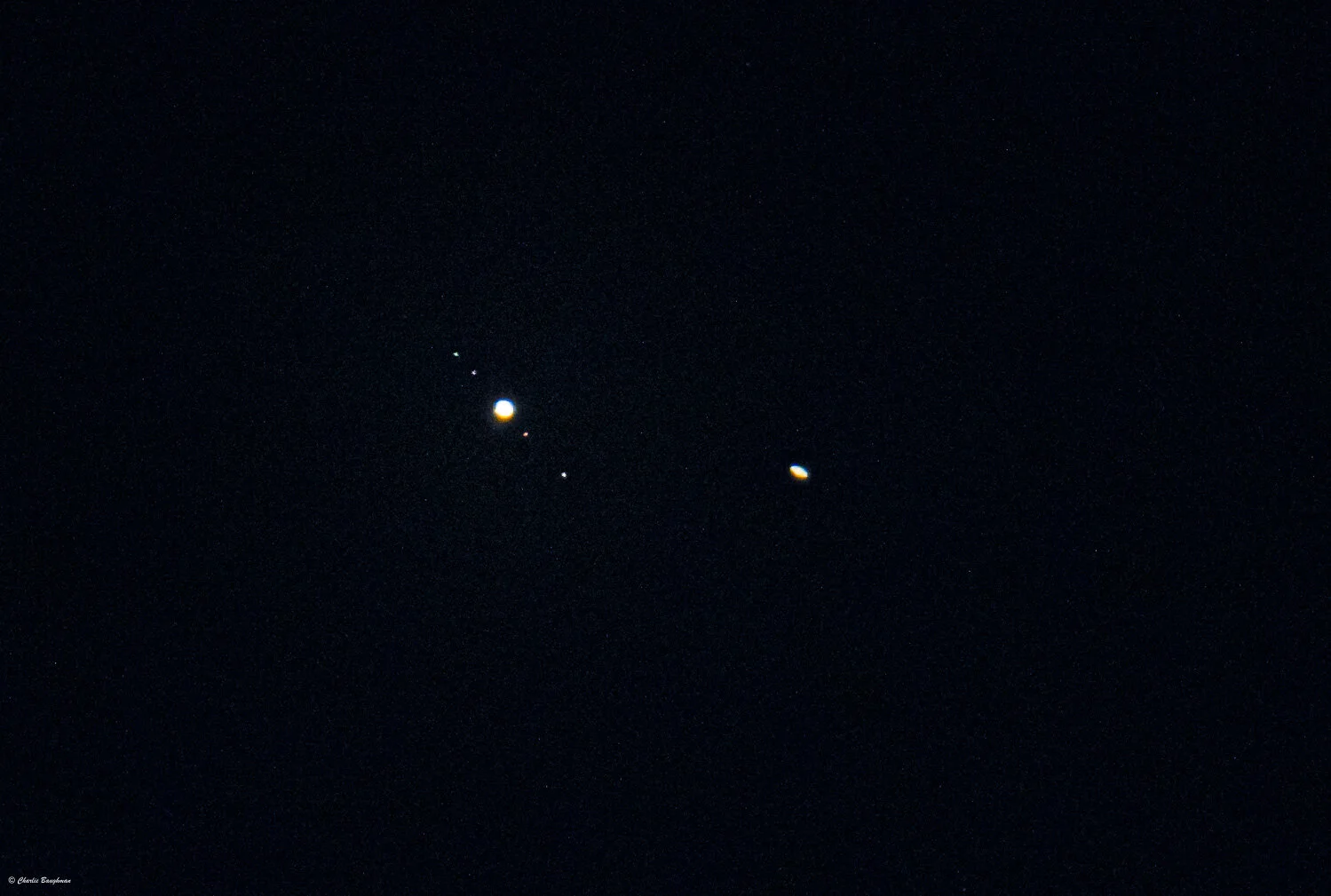
Jupiter with 4 of its moons and Saturn is to the right.
The next shot is after sunset on 12/17. I used the same equipment as the last shot and the same setup except the settings were 1 sec, f/3.2, iso 1250.
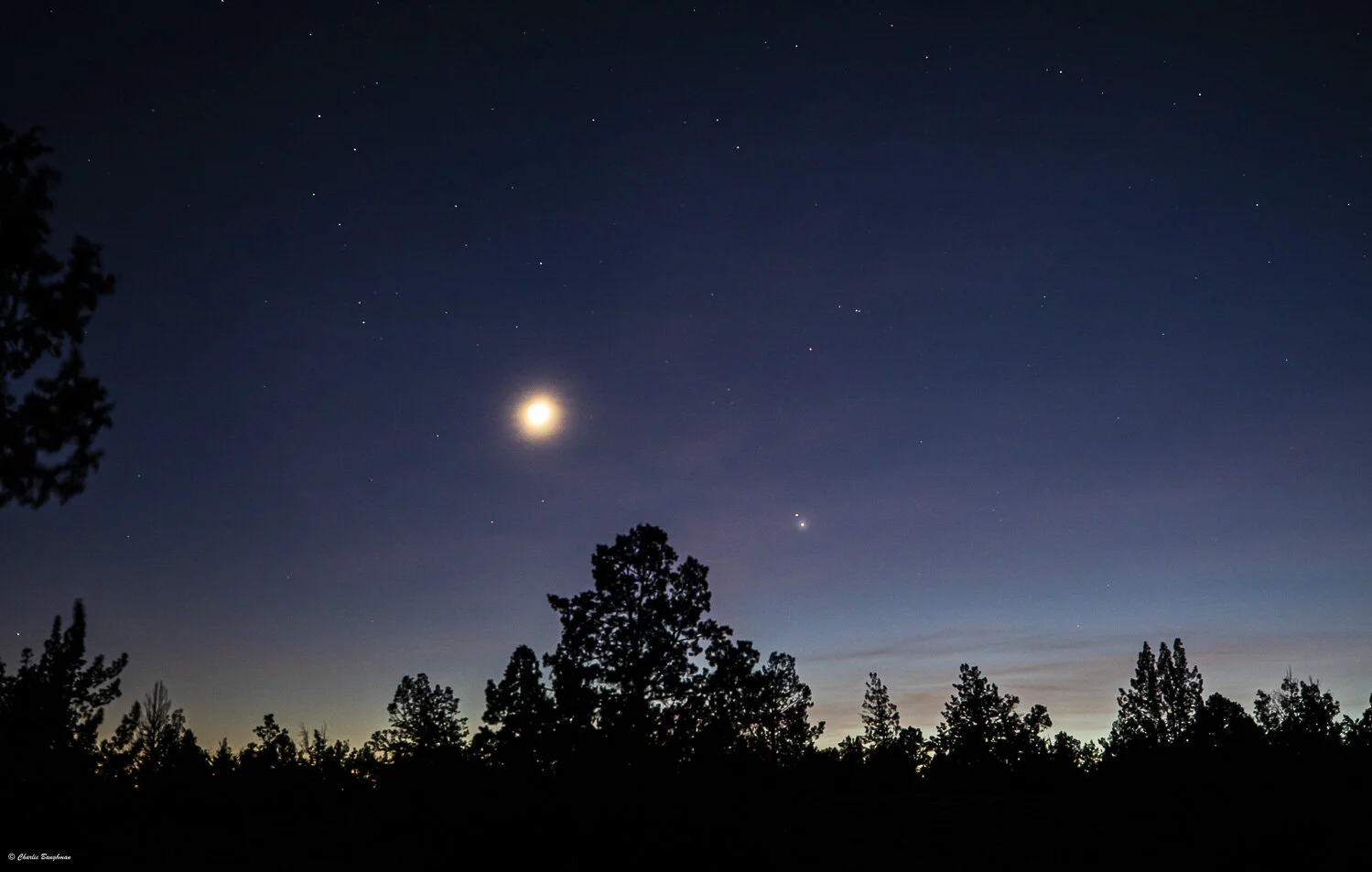
Jupiter and Saturn after sunset on 12/17
The next shot is after sunset on 12/22. I used a Canon 5D 4 camera and a 16-35 f/2.8 III lens. I used a 2-second delay and manual focus. Settings were 35mm, 1/8 sec f/2.8 iso 1000.
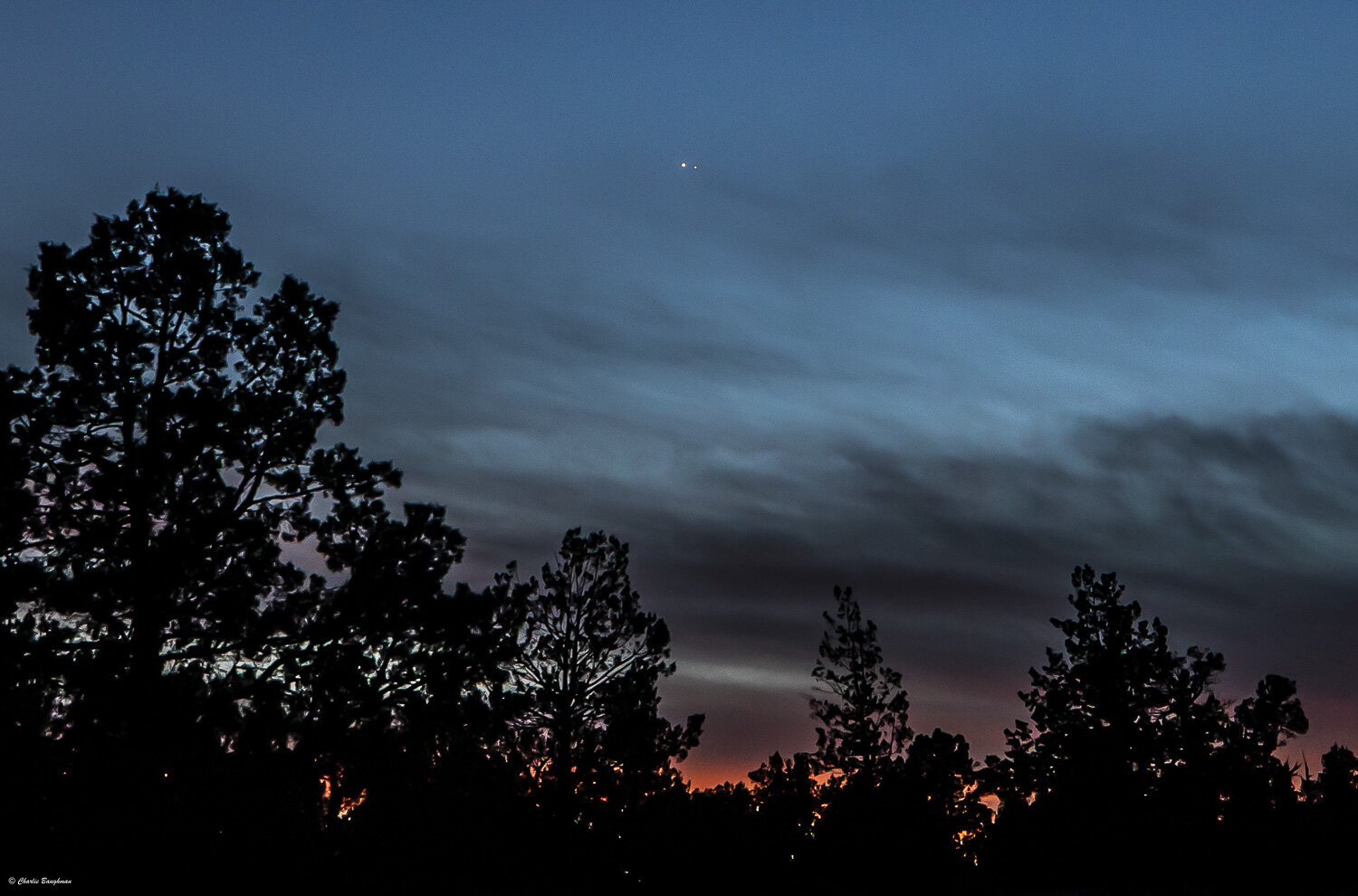
Jupiter and Saturn after sunset on 12/22
Way back in July, we were lucky enough to be visited by Comet NEOWISE, the brightest comet in the northern hemisphere since Comet Hale-Bopp in 1997. The comet could be seen on the northwestern horizon, below the Big Dipper. The last one of these 3 images from Charlie shows the Big Dipper and the comet together. CLICK TO ENLARGE.


In a year that has been a challenge for us all, we’re grateful for the chance to reflect on our connection to the universe through these amazing events and powerful images. Thanks, Charlie.